

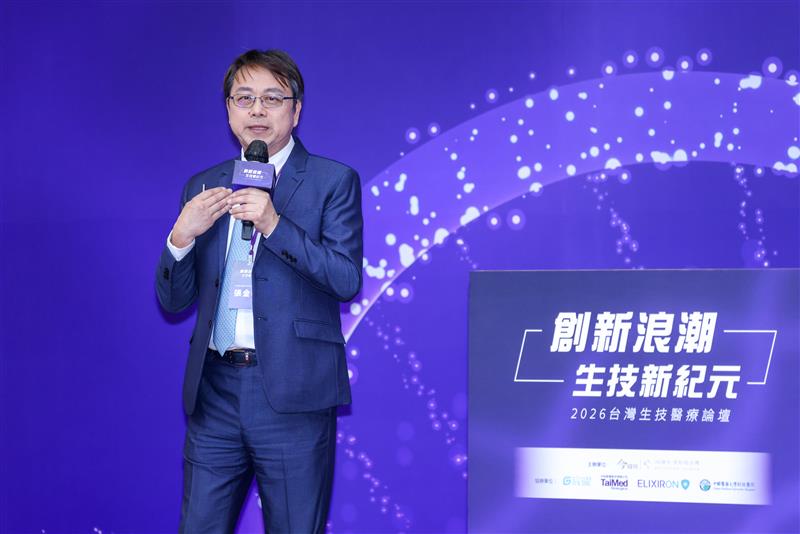
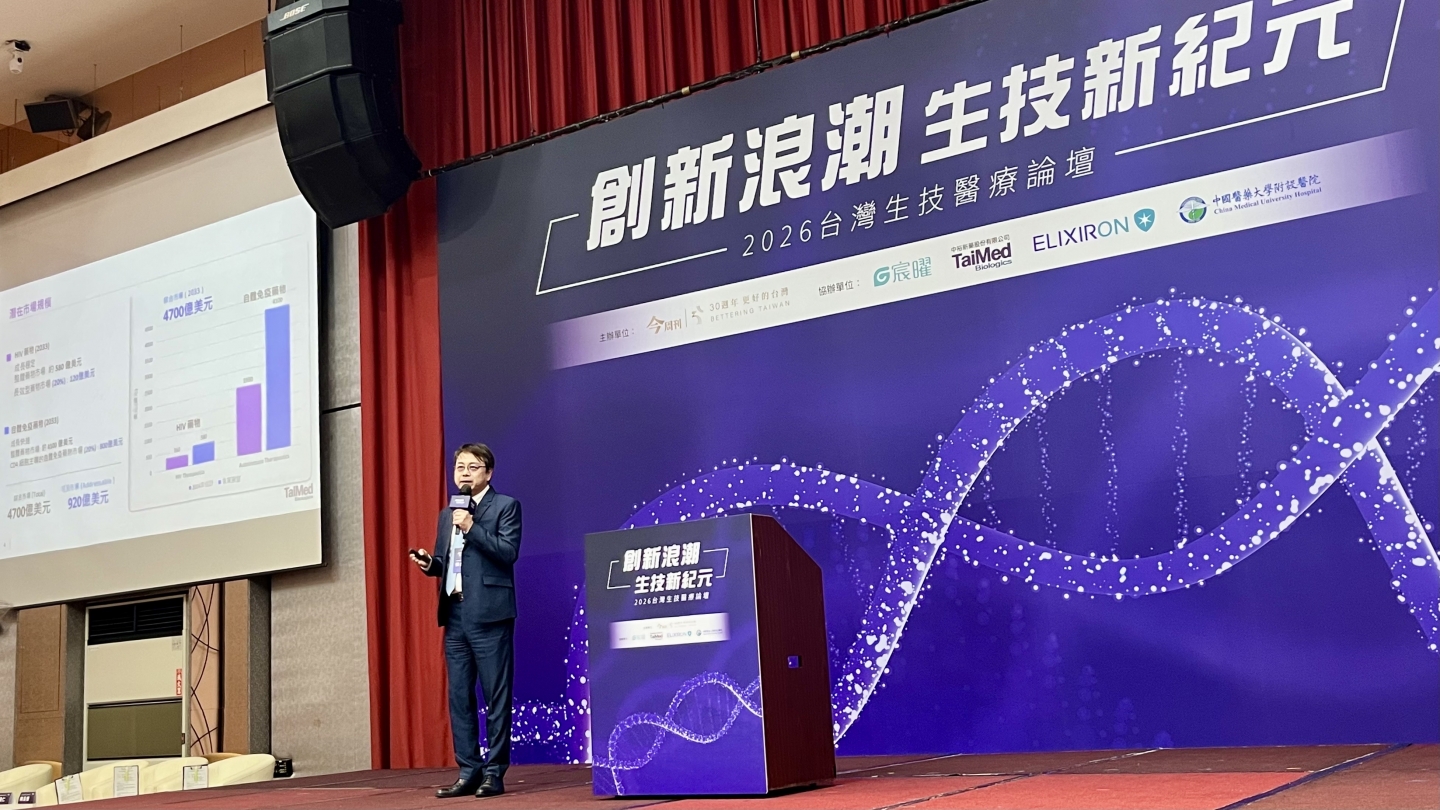
Dr. Jimmy Chang, CEO of TaiMed Biologics (TPEX: 4147), was invited today to speak at the “2026 Taiwan Biotechnology & Healthcare Forum”. Dr. Chang delivered a keynote presentation titled “From Long-Acting HIV Therapy to Precision Immunotherapy: TaiMed’s Innovative Platform Development Strategy.” During the presentation, he explained how TaiMed is building a technology platform centered on CD4 antibody innovation—starting from its approved HIV antibody therapy and expanding toward long-acting treatments and precision immunotherapy platforms targeting both HIV and autoimmune diseases. The company is positioning itself to capture long-term opportunities in a combined potential market exceeding US$470 billion, forming the company’s long-term growth curve.
Dr. Chang noted that TaiMed is the first Taiwanese biotechnology company to successfully commercialize a first-in-class monoclonal antibody drug globally. The company’s HIV antibody therapy Trogarzo® (ibalizumab) received U.S. FDA approval in 2018, becoming the world’s first CD4-targeted antibody therapy for HIV. This milestone not only represented a significant breakthrough for Taiwan’s biotechnology industry in antibody drug development, but also established TaiMed’s comprehensive capabilities in drug discovery, clinical development, regulatory approval, and commercial manufacturing. Trogarzo has since generated a stable revenue stream and continues to expand into markets in the Middle East, North Africa, and Asia.
Building on this success, TaiMed is advancing its next-generation TMB-365/380 long-acting dual-antibody therapy. The therapy is designed as a dual-mechanism antibody regimen, simultaneously targeting the host CD4 receptor and the virus itself to create a strong barrier against viral resistance and mutation escape. Compared with current therapies, TMB-365/380 offers three key differentiating advantages:
1. No viral sensitivity screening required: With high potency and broad coverage, treatment can be initiated directly, reducing patient loss associated with screening barriers in conventional therapies.
2. Zero drug–drug interactions (DDI): The global HIV patient population is rapidly aging, with more than 50% of patients now over 50 years old, often experiencing multiple chronic conditions and polypharmacy. Antibody therapies are not metabolized through the liver, avoiding drug interactions and providing clear clinical advantages for elderly and comorbid patients.
3. An optimal dosing strategy: Offering either once-every-two-month intravenous infusion (Q2M) or once-monthly subcutaneous self-injection (Q1M), significantly reducing pill fatigue and psychological burden while ensuring 100% treatment adherence.
In terms of clinical development, TMB-365/380 has completed its Phase 2a clinical trial, demonstrating a favorable safety and tolerability profile. No serious adverse events or virologic failures were observed during the study. The company has now initiated a Phase 2b clinical trial, with interim data expected between late 2026 and early 2027, while actively advancing global licensing and strategic partnership discussions.
Beyond HIV therapy, TaiMed’s next growth engine will be its CD4-ADC (antibody-drug conjugate) platform. Dr. Chang explained that this platform uses the second-generation CD4 antibody TMB-365 as a targeting “navigation system.” By changing the payload, the platform could either precisely eliminate latent HIV reservoirs in pursuit of a functional cure, or modulate abnormal CD4+ T cells to treat autoimmune diseases.
Compared with existing treatments such as JAK inhibitors, which may cause systemic immunosuppression, TaiMed’s ADC approach enables targeted drug delivery to diseased tissues, significantly improving safety while reducing toxicity. Target indications include rheumatoid arthritis, multiple sclerosis, Crohn’s disease, psoriasis, and systemic lupus erythematosus, addressing a market opportunity estimated at US$80–100 billion.
Dr. Chang noted that the global autoimmune disease therapeutics market continues to grow rapidly and is projected to reach approximately US$410 billion by 2033 (with around US$80 billion associated with CD4-driven diseases). When combined with the HIV treatment market, the total potential market opportunity could exceed US$470 billion. TaiMed aims to leverage its antibody platform technology to enter these high-growth sectors and build long-term competitive advantages.
Institutional investors attending the forum also pointed out that the global HIV treatment market is shifting from daily oral regimens to long-acting therapies, including injectable drugs and antibody-based treatments, to improve patient adherence and reduce resistance risk. If future clinical results for TMB-365/380 continue to be positive, TaiMed may establish a differentiated competitive position in the long-acting HIV therapy market and position the program as a key asset for future licensing and strategic partnerships.
Industry analysts attending the forum also believe that antibody–drug conjugates (ADCs) and precision immunotherapy have become major R&D trends in the global biotechnology sector. If TaiMed successfully extends its CD4 antibody technology into an ADC platform and expands into autoimmune disease indications, the company could develop a platform-based business model similar to that of major international biotechnology companies, generating sustained revenue through multiple licensing and collaboration opportunities.
In closing, Dr. Chang shared TaiMed’s strategic roadmap, which parallels the three-stage valuation growth trajectory of Gilead Sciences. Starting with foundational innovation (Trogarzo), followed by long-acting antibody combinations (TMB-365/380), and ultimately expand into HIV cure strategies and autoimmune disease treatments through the CD4-ADC platform. Through diverse partnership models—including regional licensing and indication-specific co-development collaborations—TaiMed seeks to build a globally competitive antibody innovation platform and advance toward becoming a leading international biopharmaceutical company


 Contact CDMO Service